
The technique mistakes that reduce your results and the simple protocol changes that actually work — from someone who uses a massage gun daily as part of a serious training routine.
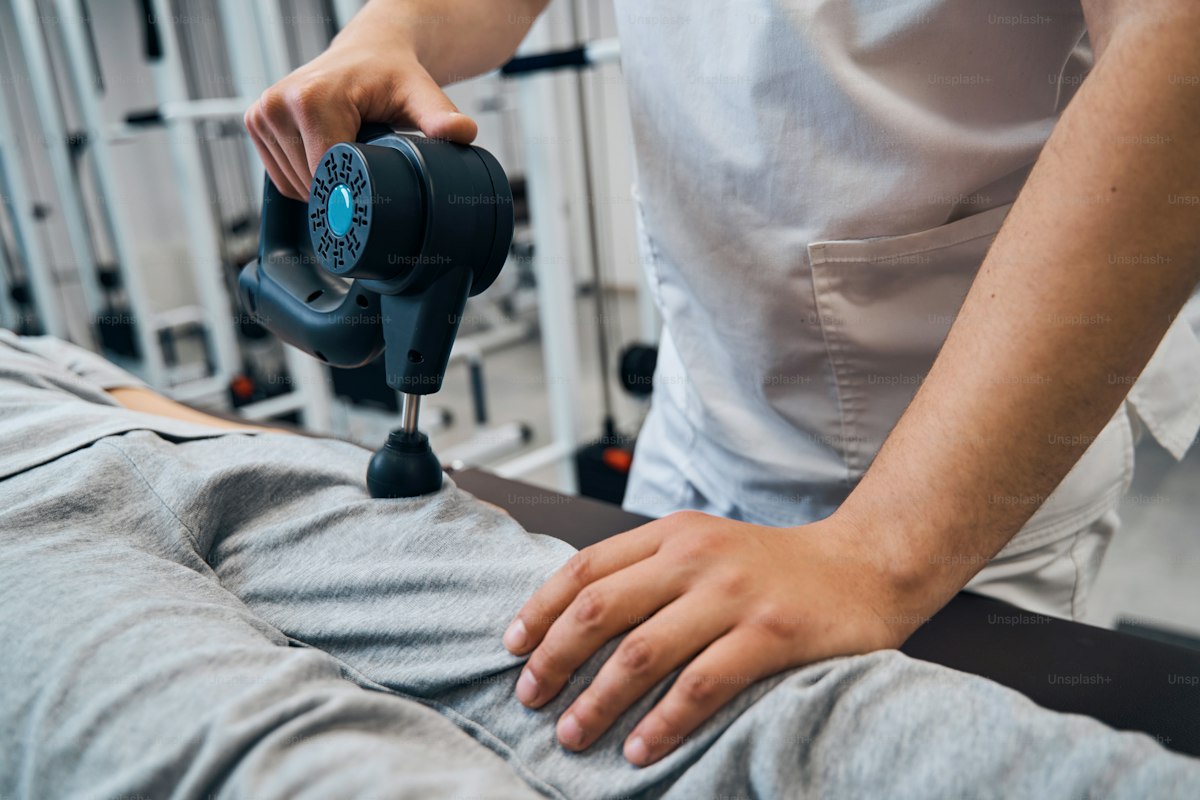
The 2-Minute Rule — The Most Important Thing You Will Learn
Never use a massage gun on any single muscle group for more than 2 minutes in one session. This is not an arbitrary guideline — it is the clinical standard used in physical therapy and supported by the research on percussive therapy.
Here is why it matters: beyond 2 minutes of sustained percussion on the same tissue, you start to create micro-trauma in already-fatigued muscle fibres. The therapeutic window for percussive therapy is 30–120 seconds per muscle group. Within that window, the mechanical stimulation increases blood flow, reduces neural excitability, and breaks up adhesions. Beyond that window, diminishing returns turn to potential irritation.
Up to 2 minutes maximum for particularly tight or problematic areas.
Move constantly — slide the gun slowly along the length of the muscle rather than holding it on one spot.
Never exceed 2 minutes on any single area in a single session.
Where NOT to Use a Massage Gun
This is more important than where to use it. Percussion therapy applied to the wrong areas can cause serious injury.

Pre-Workout vs Post-Workout — Different Protocols for Different Goals
Pre-Workout: Activation Protocol
Before training, the goal is muscle activation — increasing blood flow and neural excitability in the muscles you are about to use. Pre-workout percussion should be lighter and faster: a higher speed setting for 30–45 seconds per muscle group, moving briskly along the full length of the muscle.
Post-Workout: Recovery Protocol
After training, the goal shifts to reducing neural excitability, increasing local circulation for nutrient delivery, and beginning the process of clearing metabolic waste from the trained muscles. Post-workout percussion should be slower and more deliberate.
The Correct Movement Pattern
The most common mistake I see is using a massage gun like a static pressure tool — pressing it into one spot and holding it there. This is how you use a foam roller. A percussion massager works differently.
The gun should move continuously along the length of the muscle — from the muscle’s origin point to its insertion point, slowly and deliberately. Think of it as ironing a shirt rather than pressing a button. The continuous movement distributes the percussive therapy across the full length of the muscle rather than concentrating it at a single point.
Move at approximately 1–2 inches per second along the muscle length.
When you reach the other end, reverse direction.
Complete 3–4 full passes within your 60–90 second window.
Do not linger at any point of tightness for more than 10–15 seconds before moving on.

How Much Pressure to Apply
Most men press too hard. The gun is doing the work through percussion — you do not need to add significant downward pressure. The correct pressure is enough that you can feel the attachment clearly against the muscle, but not enough that the motor slows down or you are visibly pressing the gun into the tissue.
A useful test: if the gun is slowing down under the pressure you are applying, you are pressing too hard. Quality percussion massagers maintain their RPM under reasonable pressure, but at excessive pressure any gun will slow. If yours is slowing, ease off.
The Attachment Guide — Which Head for Which Muscle
How Often Should You Use a Massage Gun?
Daily use is safe and beneficial if you are training regularly. I use mine every day — a pre-session activation pass on the muscles being trained, and a post-session recovery pass on the same muscles.
On rest days, a light pass on any areas of residual soreness is helpful for active recovery. Keep the duration shorter on rest days — 30–45 seconds per area is adequate without the training context.
Combining Massage Gun with Other Recovery Tools
The massage gun is most effective as part of a layered recovery approach rather than as a standalone tool. Compression recovery — specifically pneumatic compression leg massagers — provides a different mechanism (lymphatic drainage and venous return) that complements percussion therapy well. Use the massage gun first for localised trigger point work, then compression for full-limb systemic recovery.
For knee-specific recovery, knee sleeves worn during training combined with post-session massage gun work on the quad and hamstring muscles (not the knee joint itself) is the most effective protocol I have found for managing training volume on the legs.
The Quick Reference Protocol
Post-workout: Low-medium speed → 60–90 sec per muscle → slow passes → all trained muscles
Rest day: Low speed → 30–45 sec per sore area → slow passes → targeted recovery
Never: Over 2 minutes per muscle group → directly on joints → directly on the spine → on acute injury
Competitive athlete through high school and college. Now 48, training for performance and longevity. Keeno founded FitDad Forge to publish the honest, experience-backed fitness content he wished existed when he was starting out.